Executive Summary
Bottom Line Up Front: The convergence of the Great Wealth Transfer with advanced tokenization technology creates an unprecedented opportunity to transform illiquid wealth into dynamic, accessible investment vehicles. Organizations that position themselves at this intersection will capture disproportionate value in the largest capital reallocation in history.
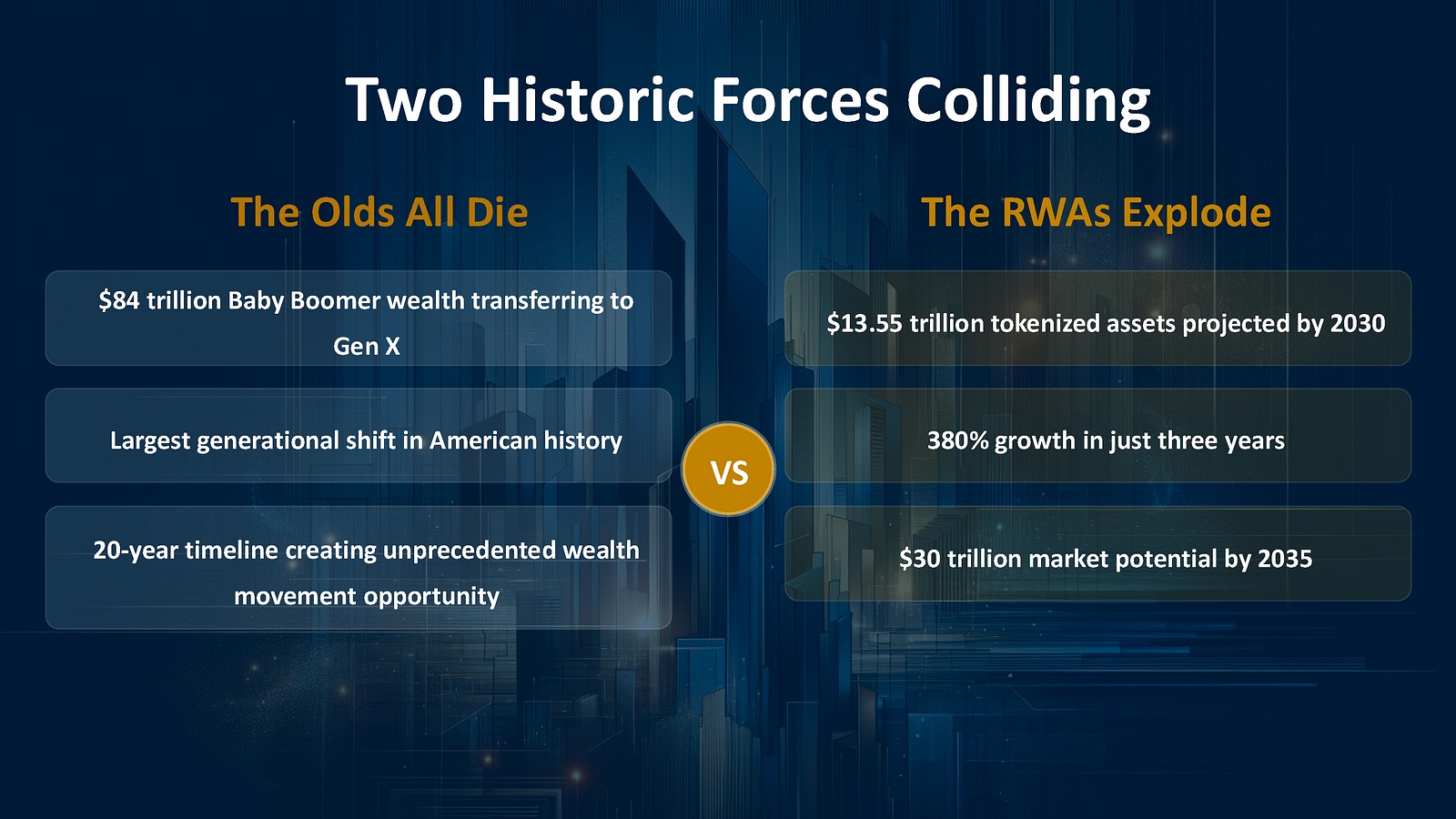
Two unprecedented financial phenomena are converging to create the largest wealth mobilization opportunity in human history. The first is the estimated $84 trillion Great Wealth Transfer from Baby Boomers to younger generations over the next two decades. The second is the emergence of real-world asset (RWA) tokenization, which is unlocking hundreds of trillions in previously illiquid capital stored in real estate, art, intellectual property, and other tangible assets. Combined, these forces represent a $600+ trillion transformation of global wealth ownership and accessibility.
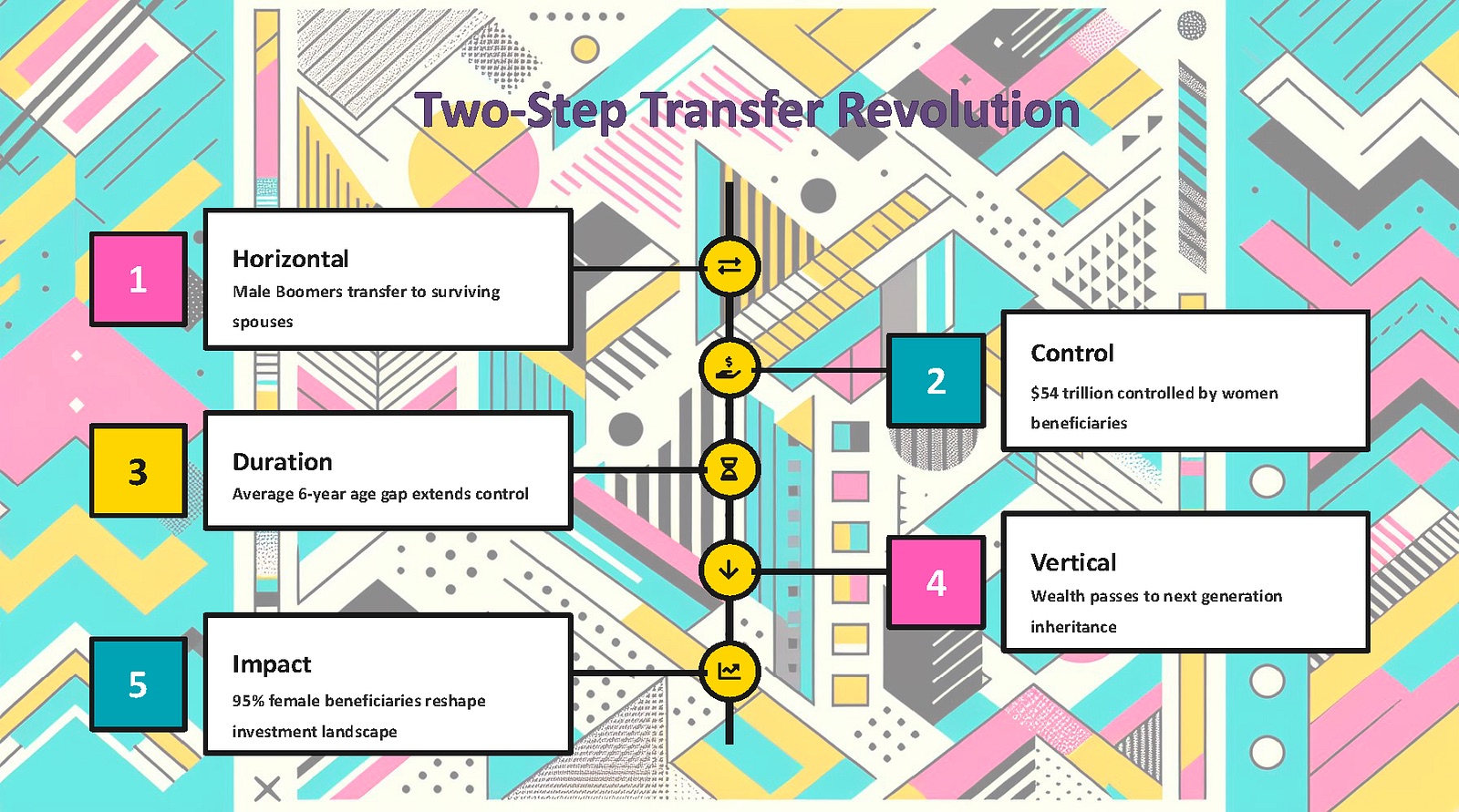
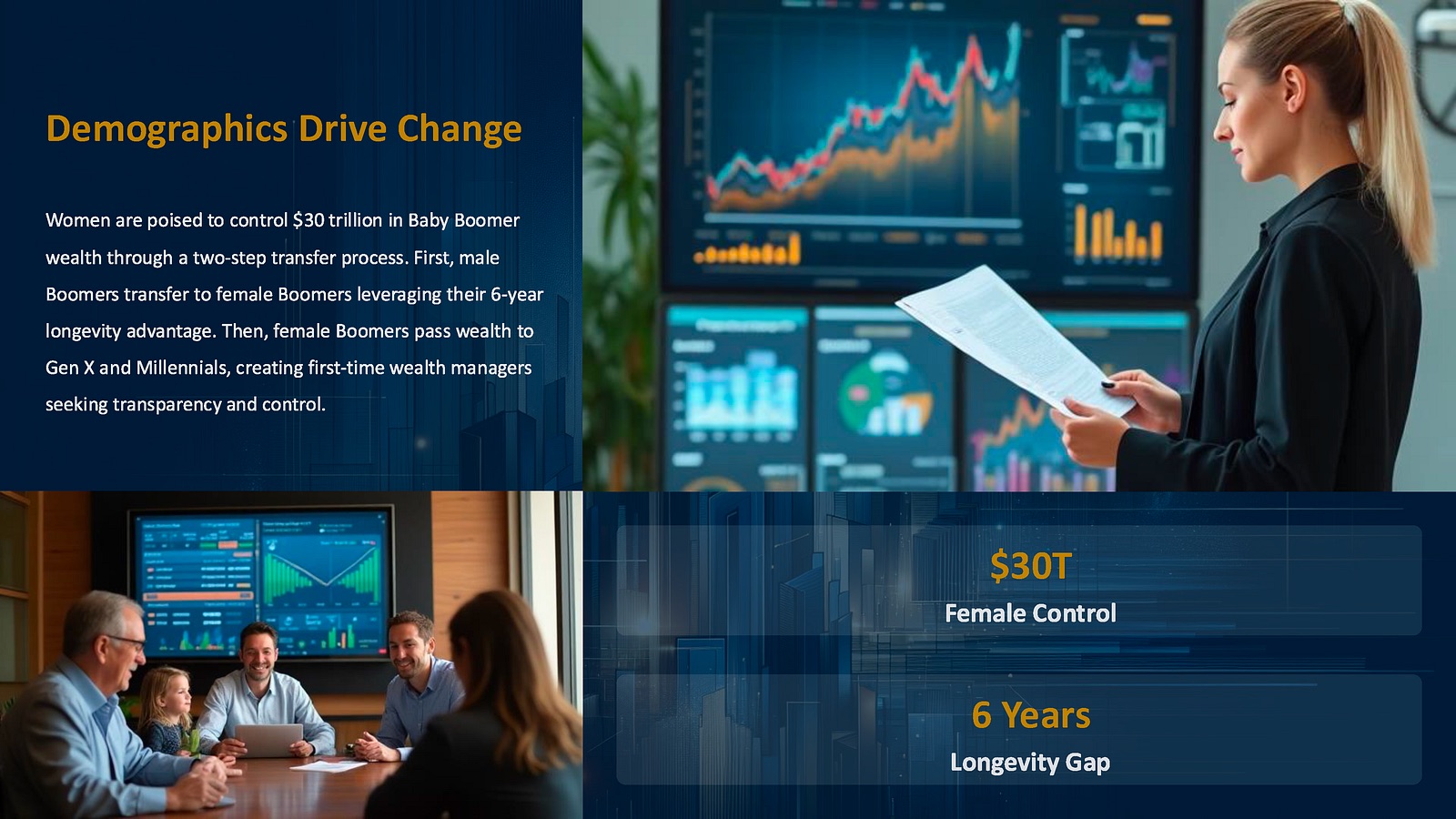
Women are poised to control much of the $30 trillion in wealth expected to be possessed by baby boomers by the end of this decade, creating a two-step transfer phenomenon where wealth first passes from aging male Boomers to their wives, then to Gen X and Millennial children. This demographic shift is occurring precisely as tokenization for real-world assets (RWA) is gaining significant momentum, with industry projections indicating some $50 billion in value will be reached this year and conservative estimates suggesting $30 trillion in asset tokenization by 2030.
 The Great Wealth Transfer is Afoot
Current State Analysis: A Tale of Two Revolutions The Great Wealth Transfer Landscape
The scale of intergenerational wealth transfer currently underway defies historical precedent. Baby boomers’ wealth grew from $4.5 trillion in 1990 to $76.2 trillion in 2023, representing roughly half of all U.S. wealth ³¹. According to Federal Reserve data, “$78.1 trillion — belongs to the baby boomers despite comprising only 20% of the population” ²³. This concentration has created what Allianz terms the “wealthiest generation that has ever lived” ¹⁵.
The transfer mechanism is creating a unique demographic pattern. As research published in JAMA Internal Medicine indicates, “as male baby boomers die, they will leave their assets to their wives, who are typically younger, with more years ahead of them; six years on average” ²⁸. This creates a two-step wealth transfer: first from Boomer males to Boomer females, then from Boomer females to Gen X and Millennial heirs. The implications are profound: many women will be managing substantial wealth portfolios for the first time in their lives, creating both opportunity and challenge in asset allocation decisions.
The numbers are staggering across generations. According to Cerulli Associates research, “Gen X, born between 1965 and 1980, are estimated to inherit $39 trillion. Millennials, born between 1981 and 1996, are estimated to inherit $46 trillion. Gen Z, born in 1997 or later, are estimated to inherit $15 trillion” ²⁰. However, the distribution is highly skewed: Cerulli estimated that “68% of the wealth transferred between 2020 and 2045 will come from U.S. households with at least $1 million in investable assets. And only 6.9% of households have that kind of wealth to begin with” ²⁴.
 Unlike most collisions, do not avoid this one.
The Real World Asset Tokenization Revolution
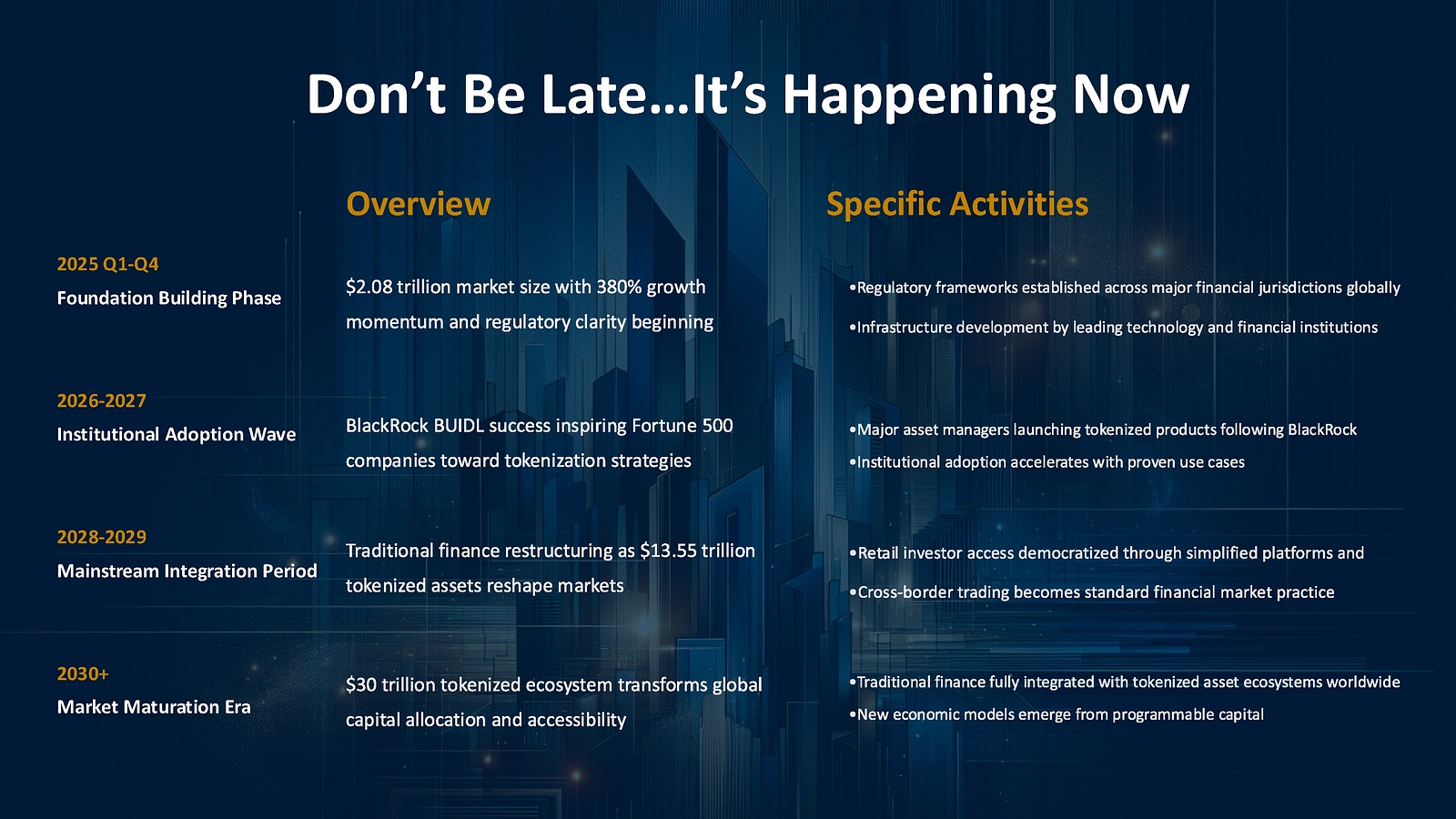
Parallel to this wealth transfer, a technological revolution is unlocking previously inaccessible capital. Real-world asset tokenization has evolved from conceptual experiment to institutional reality. According to RedStone, Gauntlet and RWA.xyz, “the real-world asset (RWA) tokenization market reached $24 billion in size this month having grown 380% in three years” ⁵, with projections ranging from conservative estimates of $10 trillion by 2030 to aggressive forecasts of $30 trillion by 2034.
The asset classes being tokenized span the full spectrum of illiquid wealth:
Real Estate: According to industry analysis, “real estate alone provides over $30 billion in value, demonstrating savings through tokenizing HELOCs, alternative financing, collateralized loans, on-chain title, funds, and more” ⁷. Traditional real estate markets, worth hundreds of trillions globally, have historically been accessible only to institutions or high-net-worth individuals.
Intellectual Property: In a documented case study, “IPwe generated a 25% increase in ROI for Crown Electrokinetics’ IP portfolio” by applying tokenization methodologies to patent portfolios ²². With global patent portfolios worth trillions and often underutilized, tokenization creates new monetization pathways.
Art and Collectibles: Platforms like DiscoverArte demonstrate how investors can “leverage valuable art pieces. These investments can be traded on secondary markets, providing liquidity to an otherwise illiquid asset class” ¹⁹. The global art market, traditionally accessible only to ultra-high-net-worth collectors, is being democratized through fractionalization and tokenization.
Private Markets: Research indicates that “private equity, private debt, and real estate often face entry barriers, such as substantial minimum investment requirements. Tokenization removes these barriers while maintaining institutional-grade compliance and security features” ².
Market Inefficiencies and Current Limitations
Despite rapid growth, significant gaps remain in both markets. The wealth transfer suffers from communication breakdowns: according to Milken Institute research, “more than a third of Americans (35 percent) say they don’t plan on discussing the transfer of wealth with their families, despite the fact that nearly half of all Americans (48 percent) plan to leave an inheritance” ²¹. This lack of planning creates suboptimal outcomes for both transferors and recipients.
In tokenization markets, regulatory uncertainty remains a primary barrier. Industry analysis indicates that “regulatory clarity remains a top barrier to adoption, but 2025 could bring significant progress. News of Paul Atkins’ appointment as SEC chair and David Sacks as Crypto Czar is increasing the likelihood for a clear U.S. legal framework for digital assets” ⁶.
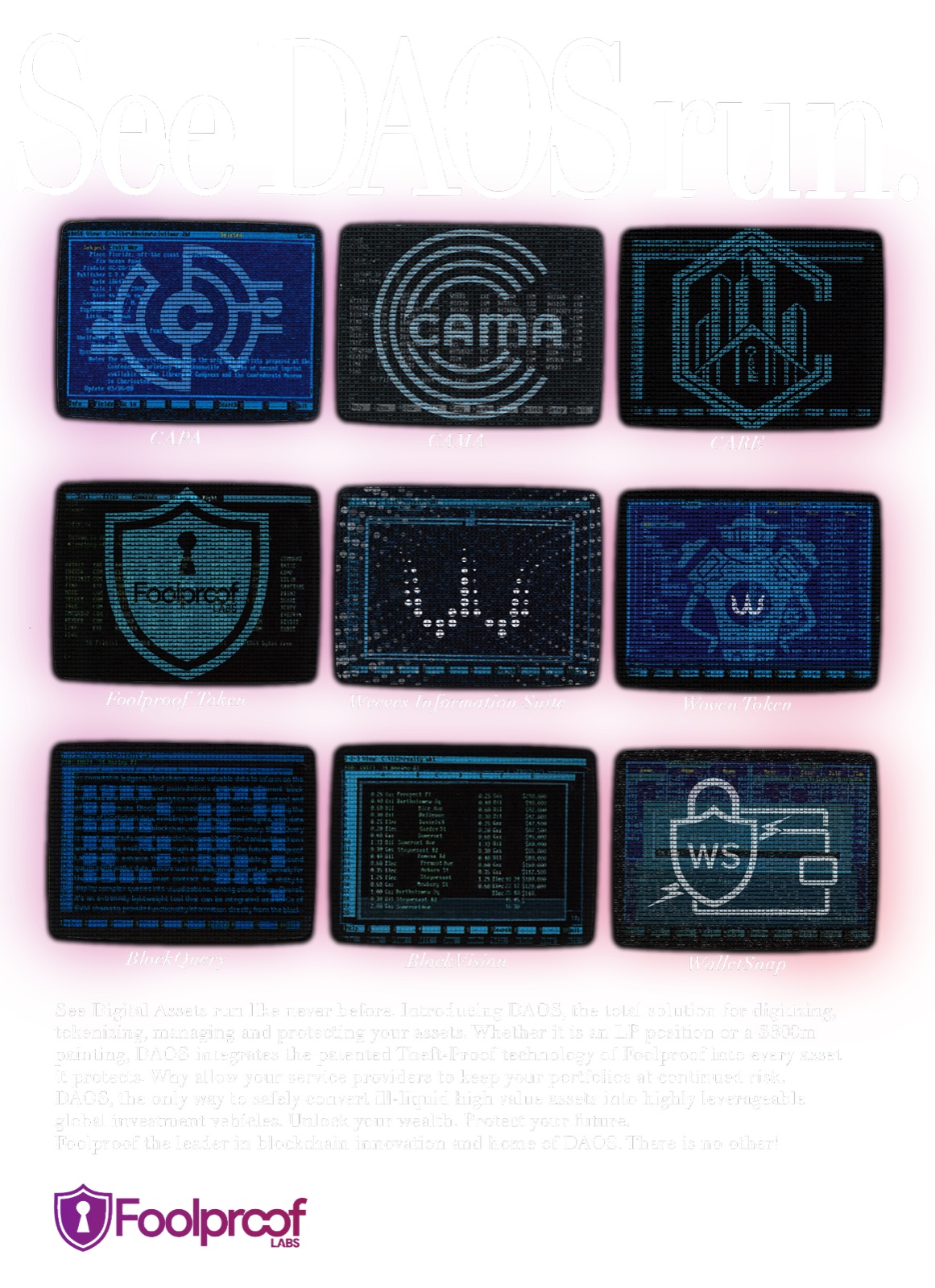
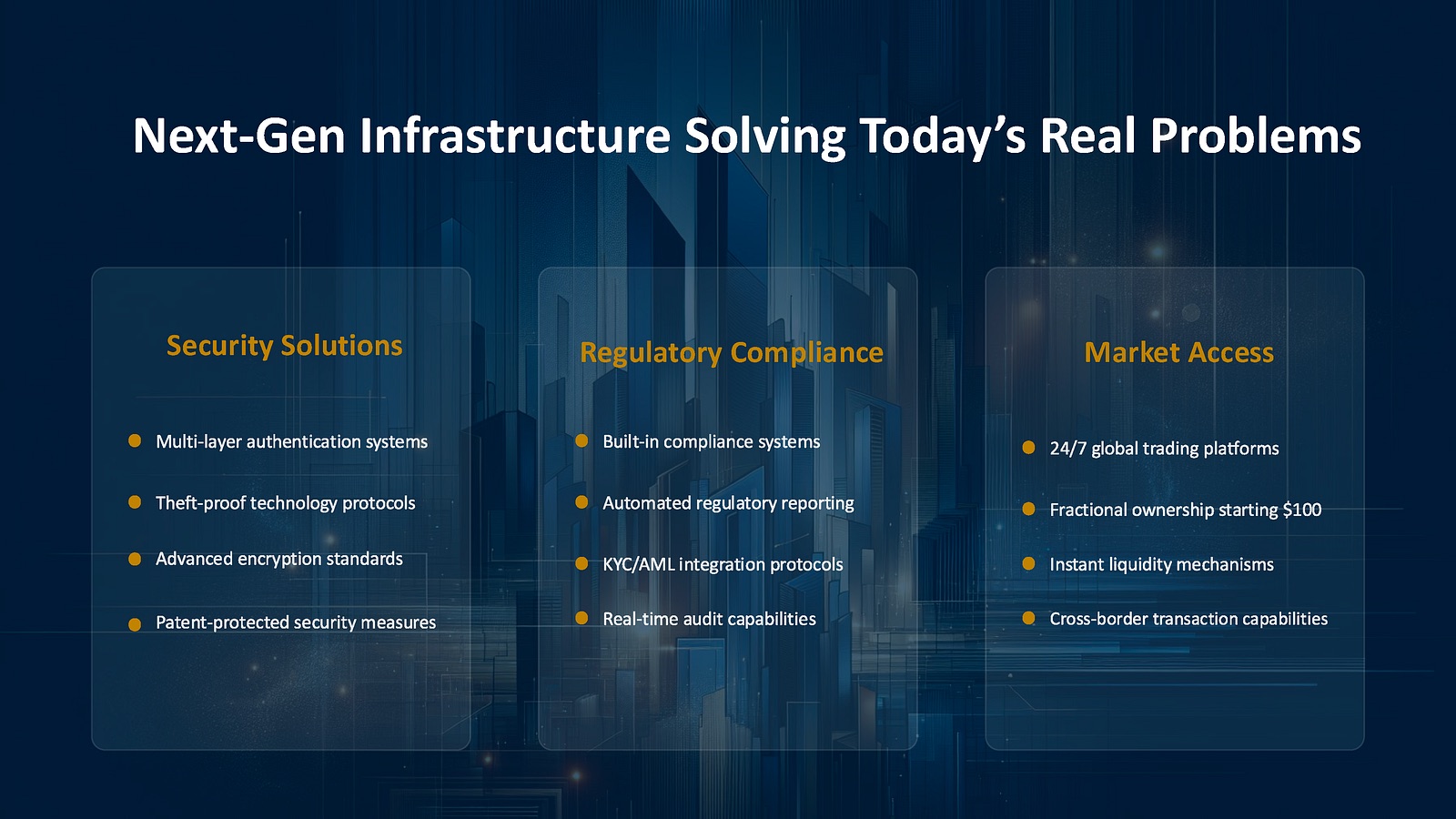
Technical infrastructure also presents challenges. Current tokenization platforms often operate in silos, lacking interoperability and standardized protocols. Security concerns persist, particularly around custody and key management for high-value assets. Additionally, many existing solutions focus on simple fractionalization without addressing complex compliance requirements for institutional adoption. This is why Foolproof Lab and Epeius developed their Digital Assets Operating System (DAOS). DAOS provides the backbone for institutions to tokenize RWAs with regulatory compliance built-in, and patented theft-proof technology foundational to every newly transformed asset ¹⁹.
 With or without you: this is getting done.
Technical Deep Dive: The Infrastructure Challenge Blockchain Infrastructure and Scalability
The technical foundation of RWA tokenization rests on blockchain infrastructure capable of handling institutional-grade transactions while maintaining security and compliance. Current implementations face several critical limitations:
Throughput Constraints: Most existing blockchain networks process 5–50 transactions per second, insufficient for large-scale asset tokenization. When a single real estate transaction might involve thousands of fractional tokens, network congestion becomes a significant barrier.
Gas Fee Economics: Transaction costs on major networks can range from dollars to hundreds of dollars during peak usage, making micro-transactions economically unfeasible. This directly impacts the ability to fractionalize assets into small, accessible units.
Finality and Settlement: Real-world assets require definitive settlement finality. While blockchain provides cryptographic certainty, integration with traditional legal frameworks requires additional verification layers that can introduce delays and complexity.
Security Architecture and Asset Protection
Tokenizing high-value real-world assets creates unique security challenges that extend beyond traditional blockchain security models:
Custody Solutions: Unlike native digital assets, RWA tokens represent claims on physical or legal entities. This requires sophisticated custody arrangements that bridge digital and physical worlds while maintaining security of both.
Multi-Signature and Multi-Factor Authentication: High-value asset tokenization demands enterprise-grade security protocols. Patent US 12,293,358: “Mitigation of Cryptographic Asset Attacks” provides methodologies for enhanced security through advanced authentication mechanisms that verify both identity and intent before executing high-value transactions.
Social Engineering and Attack Vectors: The human element remains the weakest link in asset security. Advanced systems must implement social graph analysis and behavioral monitoring to detect unusual access patterns or potential compromise attempts.
Smart Contract Complexity and Legal Integration
Real-world assets involve complex legal structures that must be accurately represented in smart contract code:
Regulatory Compliance Automation: Different asset classes and jurisdictions require varying compliance frameworks. Patent Pending 19/190,986 describes advanced methodologies for automated compliance monitoring and reporting that adapt to multiple regulatory environments simultaneously.
Governance and Voting Mechanisms: Tokenized assets often require ongoing governance decisions. Smart contracts must accommodate complex voting mechanisms, quorum requirements, and dispute resolution procedures while maintaining transparency and auditability.
Oracle Integration and Data Feeds: Real-world asset valuations depend on external data sources. Reliable oracle networks must provide tamper-resistant price feeds, occupancy data, maintenance records, and other asset-specific information.
Interoperability and Cross-Chain Challenges
The tokenization ecosystem currently suffers from fragmentation across multiple blockchain networks:
Asset Portability: Tokens representing the same underlying asset may exist on different chains, creating liquidity fragmentation and arbitrage inefficiencies.
Cross-Chain Security: Moving high-value assets between chains introduces additional attack surfaces and potential failure points that must be carefully managed.
Standardization Gaps: Lack of common standards for asset representation, metadata, and transaction formats impedes institutional adoption and creates integration challenges.
Innovation Gaps and Opportunities
Missing Capabilities in Current Solutions
Despite rapid advancement, critical gaps remain in the tokenization ecosystem that prevent full mainstream adoption:
Anonymous KYC and Verification: Current Know Your Customer (KYC) processes create privacy concerns while still requiring extensive personal information disclosure. Advanced systems like CANN (Certifying Authority Framework) enable verification of investor qualifications without revealing personal details, addressing both regulatory compliance and privacy protection.
Real-Time Asset Monitoring: Most tokenization platforms lack comprehensive monitoring of underlying asset conditions. For real estate, this means missing data on occupancy rates, maintenance issues, or environmental factors that affect value. For intellectual property, this means inadequate tracking of usage, licensing violations, or market developments.
Dynamic Permission Management: Traditional tokenization creates static ownership structures. Advanced systems require Immutable Control frameworks that enable dynamic permission adjustments based on changing circumstances while maintaining security and auditability.
Social Graph Analysis for Due Diligence: Current platforms perform minimal analysis of participant behavior patterns or relationship networks. Weeves Information Suite technologies enable sophisticated social graph analysis to detect potential fraud, market manipulation, or coordinated attacks while maintaining user privacy.
Regulatory Arbitrage and Compliance Challenges
The global nature of tokenized assets creates opportunities for regulatory arbitrage while introducing compliance complexity:
Multi-Jurisdictional Compliance: Assets may be tokenized in one jurisdiction, owned by investors in another, and physically located in a third. Current systems lack sophisticated frameworks for managing this complexity automatically.
Real-Time Regulatory Reporting: Regulatory bodies increasingly demand real-time visibility into market activities. Traditional batch reporting systems are insufficient for dynamic tokenized markets.
Cross-Border Transaction Monitoring: Anti-money laundering (AML) and counter-terrorism financing (CTF) requirements become exponentially more complex when assets can be traded 24/7 across global markets.
Market Infrastructure Inefficiencies
Existing financial infrastructure was designed for traditional assets and creates artificial barriers for tokenized assets:
Settlement and Clearing: Traditional T+2 settlement cycles are unnecessary for blockchain-based assets but regulatory frameworks often require them, creating inefficiencies and counterparty risk.
Custody and Prime Brokerage: Traditional custodians lack the technical infrastructure and regulatory clarity to properly custody tokenized assets, creating a gap for institutional adoption.
Market Making and Liquidity: Tokenized assets often suffer from poor liquidity due to lack of professional market makers and algorithmic trading support.
Technology Integration Challenges
The intersection of traditional finance and blockchain technology creates unique integration challenges:
Legacy System Integration: Financial institutions must integrate tokenization capabilities with existing core banking, risk management, and reporting systems.
Data Standardization: Lack of common data formats and APIs impedes integration between different tokenization platforms and traditional financial systems.
Performance and Reliability: Institutional adoption requires 99.99% uptime and sub-second response times that many current blockchain systems cannot consistently deliver.
 We own the solutions, we are delivering them to partners now!
Next-Generation Solutions Framework Advanced Security and Asset Protection Systems
The convergence of the Great Wealth Transfer with tokenization technology demands unprecedented security measures that protect both digital assets and the complex legal structures underlying real-world assets.
Multi-Layer Authentication Protocols: Building upon Patent US 12,293,358: “Mitigation of Cryptographic Asset Attacks”, next-generation systems implement multi-factor authentication that extends beyond traditional methods. These systems incorporate biometric verification, device fingerprinting, social graph analysis, and temporal pattern recognition to create comprehensive identity verification that adapts to threat levels.
BlockVision Real-Time Monitoring: Advanced threat detection systems provide continuous monitoring of asset-related transactions and activities. BlockVision technology enables real-time analysis of transaction patterns, flagging unusual activities that might indicate compromise, fraud, or market manipulation. The system learns from historical patterns while adapting to new threat vectors.
WalletSnap Emergency Protocols: In crisis situations where assets face immediate threat, automated emergency protocols can rapidly evacuate assets to secure custody arrangements. These systems activate based on predefined threat criteria while maintaining full audit trails and legal compliance.
Revolutionary Ownership and Access Management
Traditional ownership models prove inadequate for the complex scenarios created by tokenized real-world assets and intergenerational wealth transfer.
Foolproof Token (FPT) Architecture: Advanced tokenization separates asset ownership from access rights, enabling sophisticated inheritance and succession planning. FPT systems allow assets to remain under legal ownership of trusts or estates while granting specific access rights to beneficiaries based on conditions, time periods, or external events.
Dynamic Permission Frameworks: Immutable Control systems enable sophisticated permission management that can adapt to changing circumstances while maintaining security. These systems support complex scenarios such as gradual ownership transfer, conditional access based on beneficiary age or milestones, and emergency override capabilities for family situations.
Anonymous Verification Systems: CANN (Certifying Authority Framework) technology enables verification of investor qualifications, accreditation status, and legal capacity without revealing personal information. This addresses both regulatory compliance requirements and the privacy concerns of high-net-worth families managing wealth transfers.
Intelligent Asset Analysis and Valuation
The complexity of real-world assets demands sophisticated analysis capabilities that extend beyond simple market pricing.
Weeves Information Suite Integration: Advanced social graph analysis provides comprehensive due diligence capabilities that analyze relationships, transaction patterns, and behavioral indicators to assess asset quality and participant trustworthiness. The system identifies potential conflicts of interest, undisclosed relationships, and suspicious activity patterns while maintaining privacy protection.
BlockQuery Advanced Analytics: Sophisticated data analysis capabilities provide real-time insights into asset performance, market trends, and risk factors. BlockQuery systems can analyze vast amounts of on-chain and off-chain data to provide actionable intelligence for asset management and investment decisions.
Automated Compliance and Audit Trails: Patent Pending 19/190,986 describes advanced methodologies for automated compliance monitoring that adapts to multiple regulatory environments simultaneously. These systems provide real-time compliance reporting, automated audit trail generation, and proactive violation detection.
Provenance and Chain of Custody Solutions
Real-world assets require comprehensive tracking of ownership history, condition changes, and value-affecting events.
Immutable Provenance Tracking: Advanced systems create tamper-proof records of asset history, including ownership transfers, maintenance activities, valuation events, and legal proceedings. This capability is essential for art, collectibles, and intellectual property where provenance significantly affects value.
Multi-Modal Verification: For physical assets, integration with IoT sensors, satellite imagery, and physical inspection records provides continuous verification of asset condition and location. This creates confidence in token holder claims and enables automated insurance and maintenance protocols.
Legal Framework Integration: Smart contracts automatically enforce legal requirements such as right of first refusal, regulatory approvals, and jurisdictional restrictions while maintaining flexibility for complex real-world scenarios.
Advanced Tokenization Economics
Traditional tokenization often focuses on simple fractionalization without addressing the economic complexities of real-world assets.
Waterfall Distribution Mechanisms: Sophisticated revenue distribution systems handle complex cash flows from real-world assets, including rental income, royalties, dividend distributions, and proceeds from partial sales. These systems automatically calculate and distribute payments based on token holdings while accounting for fees, taxes, and reinvestment requirements.
Dynamic Valuation Protocols: Real-world assets require sophisticated valuation methodologies that adapt to market conditions, asset-specific factors, and external events. Advanced systems integrate multiple data sources and valuation models to provide real-time asset pricing that reflects true market conditions.
Liquidity Optimization Algorithms: Sophisticated market-making algorithms provide liquidity for tokenized assets while managing price stability and preventing market manipulation. These systems adapt to asset-specific characteristics and market conditions to optimize trading outcomes.
Industry Impact and Implementation Strategies Economic Implications for Traditional Finance
The convergence of the Great Wealth Transfer with real-world asset tokenization will fundamentally reshape the financial services industry, creating both enormous opportunities and existential threats for traditional institutions.
Disintermediation of Traditional Asset Management: Research demonstrates that “tokenization can allow for increased liquidity of traditionally illiquid assets; greater accessibility and ease of access for otherwise cloistered investment opportunities; greater transparency regarding ownership and ownership history; and a reduction in administrative costs associated with the trading of these assets” ⁴. This threatens traditional asset managers who rely on information asymmetries and high barriers to entry for their value proposition.
New Revenue Models for Financial Institutions: Forward-thinking institutions can capture value by providing tokenization services, custody solutions, and compliance frameworks. The global nature of tokenized assets creates opportunities for institutions to serve clients worldwide without traditional geographic constraints.
Credit and Lending Transformation: Tokenized real-world assets create new collateral classes for lending markets. Academic research notes that “IP owners retain equity, which means they can participate in the appreciation of the patent/copyright (most likely, a pool of patents) in excess of the interest paid, even as they lose control over the cash flow” ³³. This model can be applied across all asset classes, creating more efficient capital markets.
Implementation Challenges and Best Practices
Organizations seeking to capitalize on this convergence face significant implementation challenges that require strategic planning and substantial investment.
Regulatory Navigation: The regulatory landscape remains complex and evolving. Industry analysis suggests that “news of Paul Atkins’ appointment as SEC chair and David Sacks as Crypto Czar is increasing the likelihood for a clear U.S. legal framework for digital assets” ⁶. Organizations must build compliance frameworks that can adapt to changing regulations while maintaining operational efficiency.
Technology Integration Requirements: Successful implementation requires integration between blockchain infrastructure, traditional financial systems, and real-world asset monitoring. This demands significant technology investment and expertise that many organizations lack.
Talent Acquisition and Training: The intersection of traditional finance, blockchain technology, and real-world asset management requires specialized expertise that is currently scarce in the market. Organizations must invest heavily in talent acquisition and training programs.
ROI Considerations and Business Models
The economic opportunity created by this convergence is substantial, but requires careful analysis of investment requirements and return timelines.
Platform Economics: Successful tokenization platforms can capture value through transaction fees, management fees, and appreciation in platform tokens. Research indicates that “it’s estimated that tokenization could reduce the issuance cost of bonds by 80%” ²², creating substantial value capture opportunities for efficient platforms.
Network Effects and Market Share: Tokenization platforms exhibit strong network effects where value increases exponentially with participant adoption. Early movers can establish dominant market positions that become difficult to challenge.
Global Market Accessibility: Unlike traditional asset management, tokenization platforms can serve global markets from day one, providing access to the entire $600+ trillion opportunity rather than being limited by geographic constraints.
Case Studies in Advanced Implementation
Several organizations have demonstrated successful integration of advanced tokenization capabilities with real-world asset management:
Crown Electrokinetics Patent Portfolio Optimization: As documented in industry case studies, “IPwe generated a 25% increase in ROI for Crown Electrokinetics’ IP portfolio by applying advanced valuation and transaction methodologies. Crown used IPwe, a patent transaction platform, to identify, analyze, negotiate, and complete the transaction with IBM” ¹, demonstrating how technology can optimize intellectual property portfolios.
BlackRock Institutional Adoption: Major financial institutions are demonstrating practical implementation. “BlackRock’s BUIDL allows investors to earn yields in U.S. dollars through Securitize Markets. The fund, which invests in cash, U.S. Treasury bills, and repurchase agreements, provides daily dividends and offers enhanced liquidity and transparency through blockchain technology” ⁴. This demonstrates how major institutions can leverage tokenization for traditional asset classes.
Real Estate Fractionalization Success: Companies are achieving practical results in real estate tokenization. “Companies like RealT are already offering fractional ownership of rental properties. Investors can buy tokens representing shares of a property and receive rental income proportional to their ownership” ¹⁹. These platforms demonstrate the practical application of tokenization to illiquid real estate markets.
 Big Big Numbers!
Future Outlook: The $600 Trillion Transformation
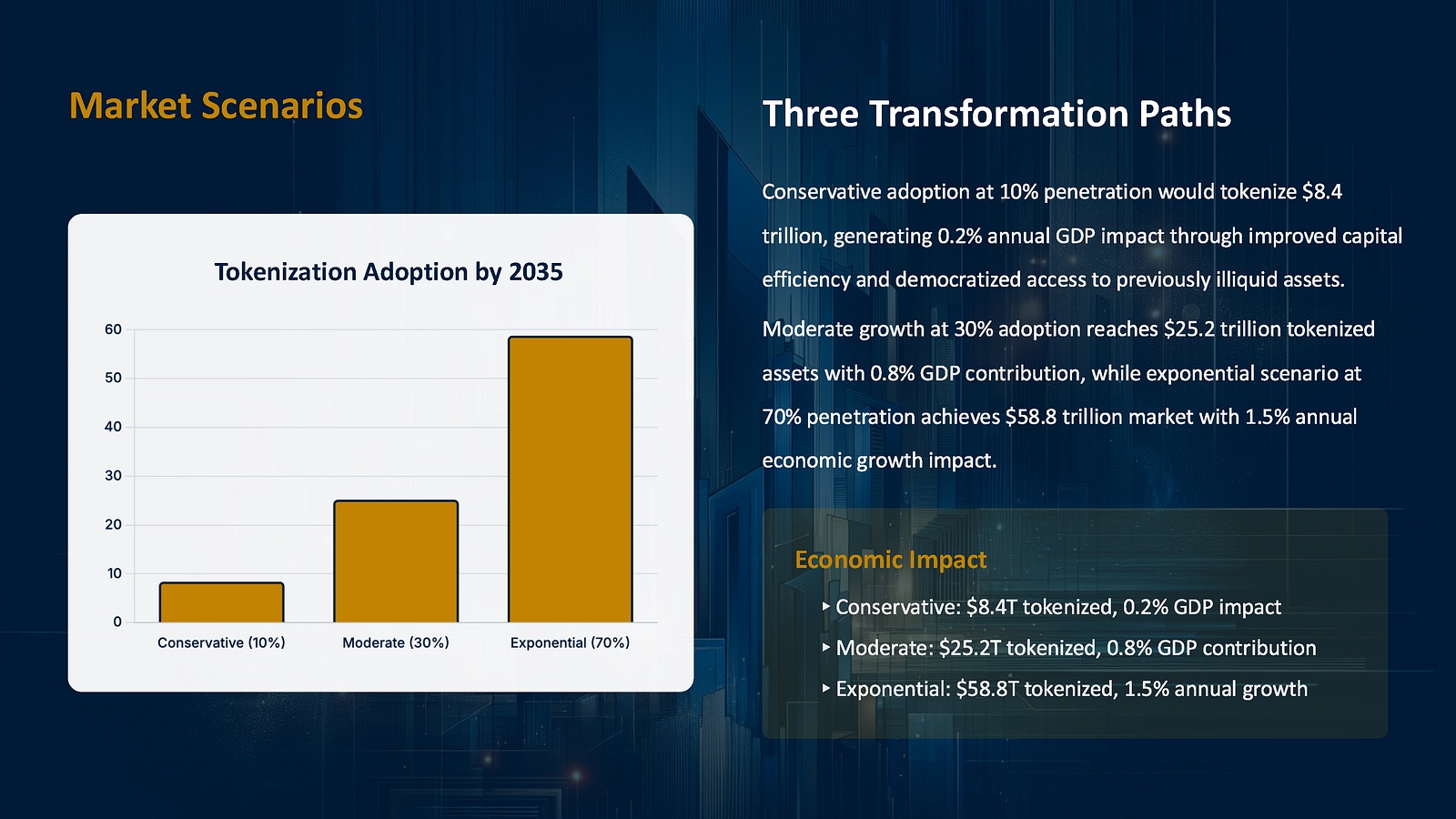
Scenario Modeling: Three Potential Outcomes
To understand the full implications of this convergence, we can model three distinct scenarios based on different adoption rates and regulatory environments:
Scenario 1: Conservative Growth (10% Tokenization Rate by 2035)
In this scenario, regulatory uncertainty persists and institutional adoption proceeds cautiously. Only 10% of the $84 trillion wealth transfer becomes tokenized, representing $8.4 trillion in new tokenized assets.
Market Impact: Traditional financial institutions retain dominance but face margin pressure as tokenization platforms capture high-growth segments. Real estate tokenization reaches $3 trillion globally, enabling fractional ownership of premium properties for middle-class investors.
Generational Wealth Impact: Millennial and Gen Z inheritors gain access to previously exclusive asset classes through fractionalization, but traditional investment minimums still exclude many participants. Women managing inherited wealth increasingly choose tokenized platforms for transparency, control, and ESG considerations.
Economic Outcomes: GDP growth accelerates by 0.2–0.3% annually due to improved capital allocation efficiency. Income inequality decreases modestly as investment opportunities democratize gradually.
Scenario 2: Moderate Acceleration (30% Tokenization Rate by 2035)
Regulatory clarity emerges by 2027, and major financial institutions embrace tokenization. Approximately 30% of wealth transfer assets become tokenized, representing $25.2 trillion in new tokenized markets.
Market Impact: Traditional asset management faces significant disruption as tokenization platforms capture 30–40% of new asset flows. Real estate tokenization reaches $10 trillion, fundamentally altering property investment markets. Art and collectibles markets see 50% tokenization rates, creating liquid markets for previously illiquid assets.
Generational Wealth Impact: Investment minimums drop to $100–1,000 for most asset classes, enabling broad middle-class participation in private equity, real estate, and alternative investments. Women controlling transferred wealth drive adoption of ESG-compliant tokenized assets, reshaping corporate behavior.
Economic Outcomes: GDP growth accelerates by 0.5–0.8% annually. Income inequality decreases significantly as investment returns democratize opportunities. New job categories emerge in tokenization platform management, creating 2–3 million new positions globally.
Scenario 3: Exponential Transformation (70% Tokenization Rate by 2035)
Comprehensive regulatory frameworks enable full institutional adoption, and technological infrastructure matures rapidly. Over 70% of wealth transfer assets become tokenized, representing $58.8 trillion in new tokenized markets.
Market Impact: Traditional financial services undergo complete restructuring. Tokenization platforms have become the dominant form of asset management. Real estate tokenization reaches $25 trillion, enabling global real estate investment by anyone with internet access. Intellectual property markets become fully liquid with 80%+ tokenization rates.
Generational Wealth Impact: Investment minimums drop to $10–100 for most assets, enabling global participation regardless of wealth level. The traditional concept of “accredited investor” becomes obsolete as technology enables sophisticated risk management for all participants. Women’s control of inherited wealth drives fundamental shifts toward sustainable and socially responsible investing.
Economic Outcomes: GDP growth accelerates by 1.0–1.5% annually due to dramatically improved capital allocation. Income inequality decreases substantially as investment returns democratize globally. Traditional banking employment decreases by 30–40% while tokenization sector employment increases by 5–8 million positions globally.
3–5 Year Industry Predictions
The convergence of the Great Wealth Transfer with real-world asset tokenization will accelerate dramatically over the next five years, driven by demographic inevitability and technological maturation.
Mainstream Institutional Adoption: By 2027–2030, tokenization will transition from experimental to standard practice for major financial institutions. As one industry report notes, “this should be the year tokenization solidifies its position and transitions into the ‘pragmatists’ portion of the adoption bell curve. With over $50 billion in RWAs already on-chain, 2025 is predicted to reach at least $500 billion” ⁷. This trajectory suggests institutional-grade adoption will reach critical mass within the prediction timeframe.
Regulatory Clarity and Standardization: The appointment of blockchain-friendly regulators in the U.S. signals forthcoming regulatory clarity that will remove major barriers to institutional adoption. International coordination will create global standards for tokenized asset management and cross-border transactions.
Women as Primary Decision Makers: According to McKinsey research, “women are poised to control much of the $30 trillion in wealth expected to be possessed by baby boomers” ²⁸, fundamentally altering investment decision-making patterns. This demographic shift will drive demand for more accessible, transparent, and socially responsible investment vehicles that tokenization enables.
Technology Convergence Opportunities
Several technological trends will accelerate the transformation of traditional asset management:
Artificial Intelligence Integration: AI-powered analysis will enable sophisticated asset evaluation, risk assessment, and portfolio optimization that considers factors impossible for human analysis. Weeves Information Suite technologies will provide real-time social graph analysis and behavioral pattern recognition that transforms due diligence and fraud detection.
Internet of Things (IoT) Integration: Physical assets will become “smart” through IoT sensor integration, providing real-time data on condition, usage, and performance. This enables dynamic valuation, automated maintenance protocols, and enhanced transparency for token holders.
Quantum-Resistant Security: As quantum computing threats emerge, tokenization platforms will implement post-quantum cryptographic protocols that ensure long-term security for high-value assets.
Market Structure Evolution
The financial market structure will evolve to accommodate 24/7 global trading of previously illiquid assets:
Continuous Markets: Traditional market hours will become irrelevant as tokenized assets trade continuously across global time zones. This creates opportunities for more efficient price discovery and reduced volatility.
Algorithmic Market Making: Sophisticated algorithms will provide liquidity for tokenized assets, reducing bid-ask spreads and improving price stability. This will be particularly important for illiquid asset classes that historically lacked professional market makers.
Cross-Asset Arbitrage: Tokenization will enable sophisticated arbitrage strategies across different asset classes, time zones, and jurisdictions, creating more efficient global markets.
Regulatory Developments on the Horizon
Regulatory frameworks will evolve to accommodate the unique characteristics of tokenized real-world assets:
Digital Asset Securities Frameworks: Comprehensive regulatory frameworks will clarify the treatment of tokenized assets across different jurisdictions, removing uncertainty that currently impedes institutional adoption.
Cross-Border Coordination: International regulatory bodies will develop coordinated approaches to tokenized asset oversight, preventing regulatory arbitrage while enabling global market development.
Consumer Protection Evolution: New consumer protection frameworks will address the unique risks and opportunities created by fractional ownership and global accessibility of previously exclusive asset classes.
Call to Action for Industry Stakeholders
The transformation is already underway, and stakeholders must act decisively to capitalize on this unprecedented opportunity:
Financial Institutions: Traditional financial institutions must develop comprehensive tokenization strategies that encompass technology infrastructure, regulatory compliance, talent acquisition, and business model evolution. Waiting for complete regulatory clarity will result in competitive disadvantage as early movers establish market leadership. The messaging surrounding investment opportunities should be adjusted to emphasize the altering state of the head of household for widowed Boomers.
Technology Providers: Blockchain and fintech companies must focus on building institutional-grade infrastructure that addresses security, scalability, and compliance requirements. The technical challenges are substantial, but the market opportunity justifies significant investment.
Regulators: Regulatory bodies must balance innovation enablement with consumer protection while providing clarity that enables institutional adoption. International coordination will be essential to prevent fragmentation that impedes global market development.
High-Net-Worth Families: Families managing substantial wealth transfers must educate themselves about tokenization opportunities and develop strategies that leverage these technologies for improved asset liquidity, transparency, and management efficiency.
The convergence of the Great Wealth Transfer with real-world asset tokenization represents the largest wealth transformation in human history. Organizations that position themselves strategically at this intersection will capture disproportionate value in reshaping global financial markets. The technology exists, the demographic drivers are inevitable, and the economic opportunity is unprecedented. The question is not whether this transformation will occur, but which organizations will lead it.
References
- AZ Big Media. “How asset tokenization is revolutionizing intellectual property.” AZ Big Media, 31 Jan. 2025, azbigmedia.com/business/how-asset-tokenization-is-revolutionizing-intellectual-property/
- CAIA. “Tokenization of Private Assets: Unlocking Liquidity, Transparency, & Access in the Modern Investment Landscape.” CAIA, 17 Jan. 2025, caia.org/blog/2025/01/17/tokenization-private-assets-unlocking-liquidity-transparency-access-modern.
- Chainalysis. “Asset Tokenization Explained.” Chainalysis, 22 Mar. 2024, chainalysis.com/blog/asset-tokenization-explained/
- Chainlink. “Asset Tokenization: Digital Assets Explained.” Chainlink, chain.link/education/asset-tokenization.
- CoinDesk. “RWA Tokenization Is Going to Trillions Much Faster Than You Think.” CoinDesk, 7 Feb. 2025, www.coindesk.com/opinion/2025/02/07/rwa-tokenization-is-going-to-trillions-much-faster-than-you-think.
- CoinDesk. “RWA Tokenization Market Has Grown Almost Fivefold to $24B in 3 Years.” CoinDesk, 26 Jun. 2025, www.coindesk.com/business/2025/06/26/real-world-asset-tokenization-market-has-grown-almost-fivefold-in-3-years.
- CoinDesk. “What 2025 Holds for Tokenized Real World Assets.” CoinDesk, 8 Jan. 2025, www.coindesk.com/coindesk-indices/2025/01/08/what-2025-holds-for-tokenized-real-world-assets.
- Comerica. “The Great Wealth Transfer: Essential Steps for Giving Wealth.” Comerica, 19 Sept. 2024, www.comerica.com/insights/wealth-management/wealth-preservation/great-wealth-transfer.html.
- CoreLedger. “The Growing Market for Tokenized Real-World Assets: Trends to Watch in 2025.” Medium, 20 Jan. 2025, medium.com/coreledger/the-growing-market-for-tokenized-real-world-assets-trends-to-watch-in-2025–7bde64b5a100.
- Crown Electrokinetics Corp. “Crown Electrokinetics Acquires 10 Patents from IBM.” PR Newswire, 11 Oct. 2021, www.prnewswire.com/news-releases/crown-electrokinetics-acquires-10-patents-from-ibm-301396676.html.
- Decrypt. “Real World Asset Tokenization to Hit $50B in 2025: Ozean.” Decrypt, 15 Jan. 2025, decrypt.co/301222/real-world-asset-tokenization-to-hit-50b-in-2025-ozean.
- DTCC. “Unlocking Value in Tokenized Real-World Assets.” DTCC, 14 Jan. 2025, www.dtcc.com/digital-assets/digital-standard/tokenized-real-world-assets.
- EY Switzerland. “Tokenization — From illiquid to liquid real estate ownership.” EY, www.ey.com/en_ch/insights/real-estate-hospitality-construction/tokenization-from-illiquid-to-liquid-real-estate-ownership.
- Finura. “The Great Wealth Transfer: Baby Boomers To Pass On $53 Trillion To Their Children By 2045.” Finura, 23 May 2024, www.finura.co.uk/news/the-great-wealth-transfer-baby-boomers-to-pass-on-53-trillion-to-their-children-by-2045/.
- Fortune. “Baby boomers are the wealthiest generation ever, finds Allianz wealth survey.” Fortune, 3 Oct. 2024, fortune.com/2024/10/03/boomers-wealthiest-generation-millennials-biggest-losers/.
- Fortune. “Millennials are set to become the richest generation on record thanks to the $84 trillion Great Wealth Transfer.” Fortune, 28 Mar. 2025, fortune.com/2025/03/28/millennials-richest-generation-on-record-great-wealth-transfer-from-baby-boomers/.
- IBM. “IPwe and IBM Seek to Transform Corporate Patents With Next Generation NFTs Using IBM Blockchain.” IBM, 20 Apr. 2021, newsroom.ibm.com/2021–04–20-IPwe-and-IBM-Seek-to-Transform-Corporate-Patents-With-Next-Generation-NFTs-Using-IBM-Blockchain.
- InvestaX. “2024: The Year of Institutional Real World Asset Tokenization.” InvestaX, 2024, www.investax.io/blog/2024-real-world-asset-tokenization-market-recap.
- Medium. “The Great Money Hack” Medium, 15 Jul. 2025, medium.com/foolproof-labs/the-great-money-hack-3add55195481
- Merrill Lynch. “How Will the Great Wealth Transfer Impact the Markets?” Merrill Lynch, 3 Oct. 2023, www.ml.com/articles/great-wealth-transfer-impact.html.
- Milken Institute. “We Aren’t Talking Enough About One Aspect of the Great Wealth Transfer.” Milken Institute, milkeninstitute.org/content-hub/power-ideas-essays/we-arent-talking-enough-about-one-aspect-great-wealth-transfer.
- Nasdaq. “More Than Half of US Wealth Belongs to Baby Boomers: Will Other Generations Catch Up?” Nasdaq, www.nasdaq.com/articles/more-than-half-of-us-wealth-belongs-to-baby-boomers:-will-other-generations-catch-up.
- Nasdaq. “What Tokenization Is and How It Can Unlock Illiquid and Opaque Markets.” Nasdaq, www.nasdaq.com/articles/what-tokenization-is-and-how-it-can-unlock-illiquid-and-opaque-markets.
- NBC News. “The ‘wealth transfer’ from baby boomers won’t save Gen X and millennials.” NBC News, 29 Dec. 2023, www.nbcnews.com/business/consumer/generational-wealth-transfer-baby-boomers-cant-save-gen-x-millennials-rcna128099.
- Ocean Tomo. “Intellectual Property as a Non-Correlated Investment.” Ocean Tomo, 24 Jan. 2023, oceantomo.com/insights/ip-non-correlated-investment/.
- Roland Berger. “Tokenization of Real-World Assets: Unlocking a New Era of Ownership, Trading, and Investment.” Roland Berger, Oct. 2023, www.rolandberger.com/en/Insights/Publications/Tokenization-of-real-world-assets-unlocking-a-new-era-of-ownership-trading.html.
- Securities.io. “One to Watch: How Tokenization Will Evolve in 2025.” Securities.io, 31 Jan. 2025, www.securities.io/one-to-watch-how-tokenization-will-evolve-in-2025/.
- The Washington Post. “The wealth transfer from baby boomers mostly benefits women.” The Washington Post, 16 Jan. 2024, www.washingtonpost.com/business/2024/01/16/women-economic-power-demographic-shifts/.
- U.S. Bank. “Preparing for the Great Wealth Transfer.” U.S. Bank, 11 Aug. 2022, www.usbank.com/wealth-management/financial-perspectives/women-and-money/women-and-great-wealth-transfer.html.
- Vidrih, Marko. “Tokenization of Real-World Assets: Market Growth and Trends.” Medium, 14 Nov. 2024, vidrihmarko.medium.com/tokenization-of-real-world-assets-market-growth-and-trends-a9bd1b8ed57c.
- Visual Capitalist. “Charted: U.S. Wealth by Generation.” Visual Capitalist, 27 Jun. 2024, www.visualcapitalist.com/charted-u-s-wealth-by-generation/.
- World Economic Forum. “The ‘Great Wealth Transfer’: Here’s how women can make the most of it.” World Economic Forum, Jul. 2024, www.weforum.org/stories/2024/07/women-inheritance-great-wealth-transfer/.
- YieldStreet. “Intellectual property can generate financial returns.” YieldStreet, 27 Sept. 2022, www.yieldstreet.com/blog/article/intellectual-property-can-generate-financial-returns/.
- Zoniqx. “2025 Trends in Real-World Asset Tokenization.” Zoniqx, 2025, www.zoniqx.com/resources/2025-trends-in-real-world-asset-tokenization. Decrypt. (2025, January 15). Real World Asset Tokenization to Hit $50B in 2025: Ozean. Retrieved from https://decrypt.co/301222/real-world-asset-tokenization-to-hit-50b-in-2025-ozean